I keep thinking I need to update this site. It’s long overdue. I have been extraordinarily busy between finishing up school – I pulled off two As this semester which was an amazing feat given how hard this program is – getting things planted, rabbits settled, etc., etc.
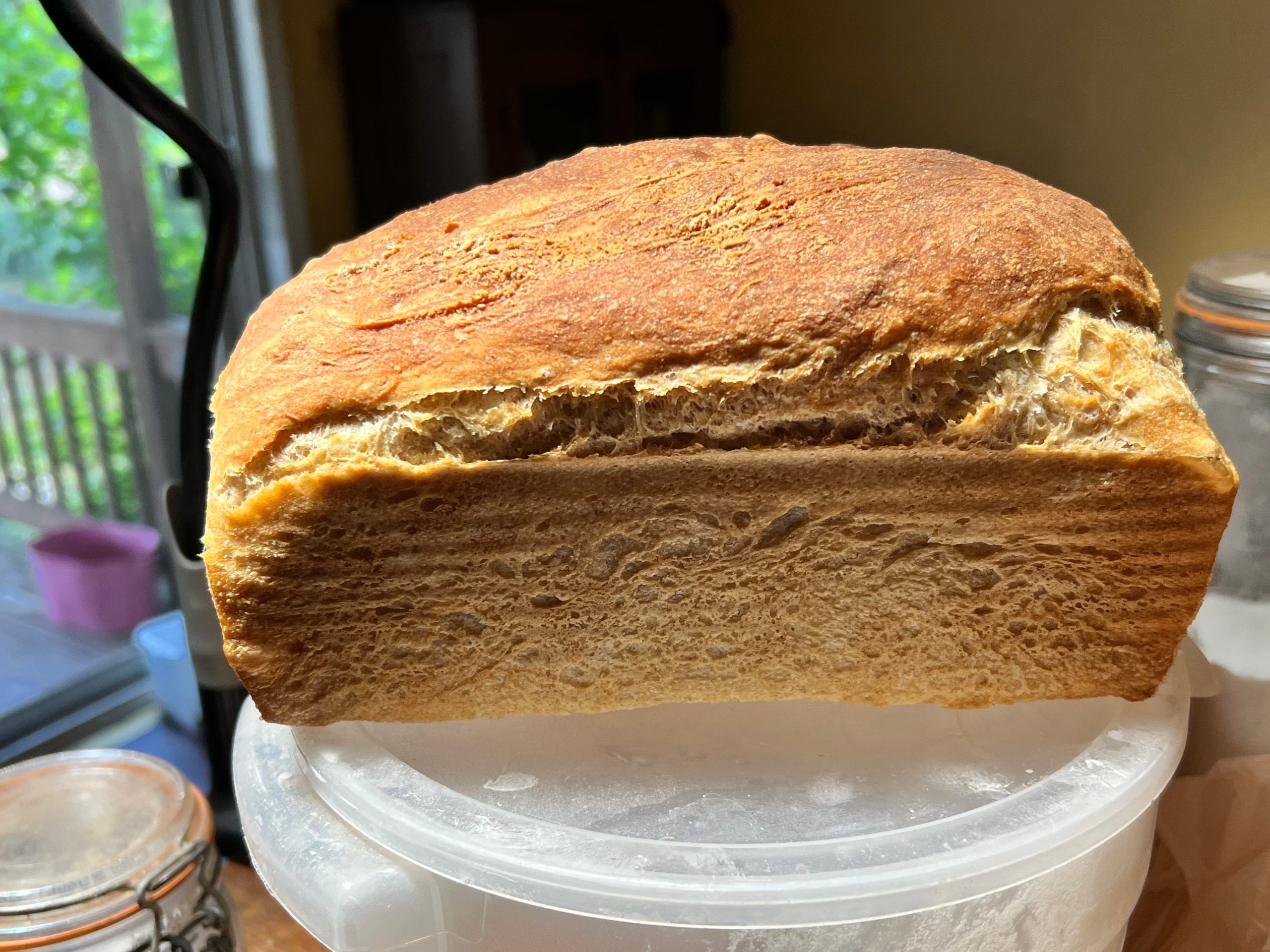
Bread – I go through stages of making bread, some of it awful, and buying bread, which I hate to do but darned it’s hard to overlook the convenience sometimes – even if it’s a substandard product. I made a quick loaf of bread on Sunday (I think) – I used a King Arthur recipe in my bread machine. I missed the end of the first rise so it over proofed, but it still wasn’t a good a loaf of bread. It’s okay, I’ve got critters who like bread or it’ll go into the compost bucket.
This bread is made using a recipe in Evolutions in Bread: Artisan Pan Breads and Dutch-Oven Loaves at Home by Ken Forkish. You think that using a bread machine is easier than making bread otherwise, but in reality, using Forkish’s recipes, both in this book and in Flour Water Salt Yeast: The Fundamentals of Artisan Bread and Pizza, is not that hard. I don’t use my mixer nor do I knead the bread. Instead, gluten is developed by stretching and folding. The whole process is done in a six quart Cambro container.
I don’t quite have the patience for bread baking, but I manage to make a decent loaf using this recipe. I don’t care for boules because they aren’t as good for sandwiches as loaf breads. I need to stop thinking the bread machine makes it “easier” or “quicker” and just make bread like this because it is better, way better. I started this loaf at around 10 and took it out of the oven at around 2. Most of the time was spent with it resting and rising. I had to do the initial mix, autolyse, then two stretch and folds. Once the dough had risen, I shaped it and plopped it in the loaf pan, let it rise, then baked it.
The garden is all consuming – but it now has even more purpose. I love going out in the morning and harvesting weeds, herbs and greens for the rabbits. I think they enjoy it as much as I enjoy giving it to them. I started with the medicinal herbs when I had honeybees, only do discover honeybees don’t forage near their hives. Lots of other stinging things visit, but not my bees. Oh well. The garden just went wild not being utilized.
Well it is now.
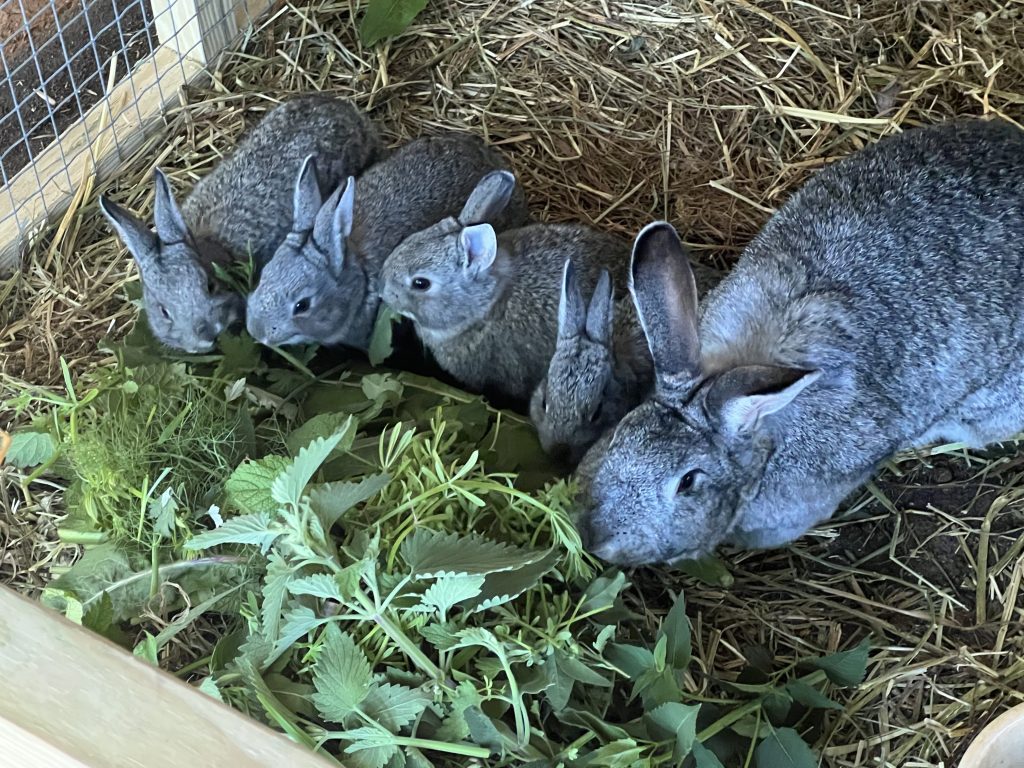
These are American Chinchilla rabbits – a rare heritage breed that I absolutely love and was blessed to be able to obtain.
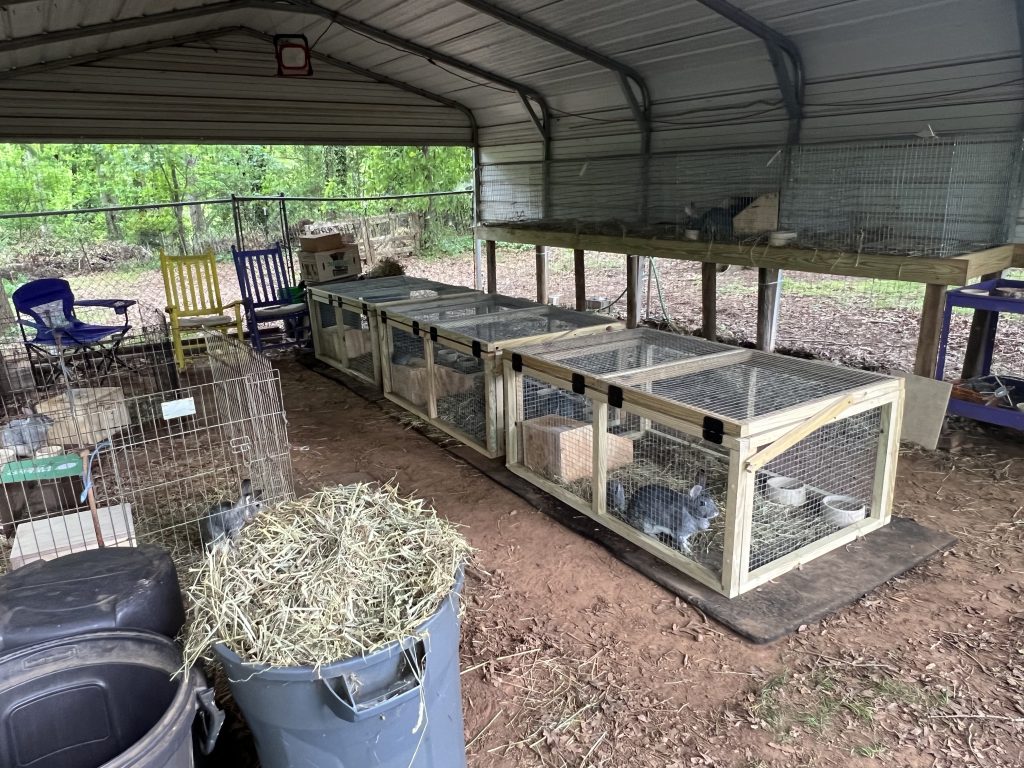
Once the babies are about four weeks old, they go with their mothers into 5×3 grow-out pens on the ground, on stall matts actually so they can’t dig out. They aren’t standing on wire. Plans are in place for three more like cages to go in a row behind these. My two bucks are temporarily in dog exercise pens. I hate raising rabbits on wire.
Each cage is deep bedded with straw. Once a month or so, I clean them out – which is a snap – and use the spent bedding – rabbit manure is garden gold – in the garden.
I’ve got two 20′ rows planted in summer cover crops – iron and clay cow peas, buckwheat, sunflowers, sunn hemp and a few other things as well as several 6×3 garden beds. The cover crops will help the soil and feed the rabbits, goats and pollinators.
It does my heart good to do all of this. It’d be a lot easier if we got some rain – we’re currently in extreme drought – but all the mulching we’ve done helps.
Until later …
No responses yet